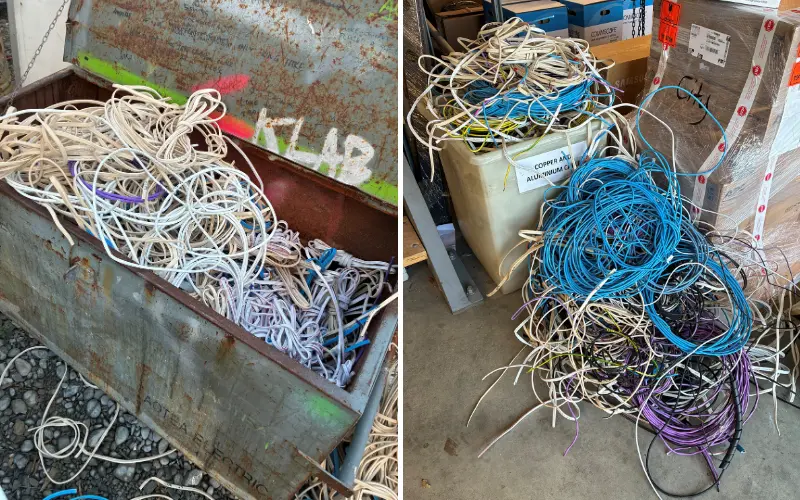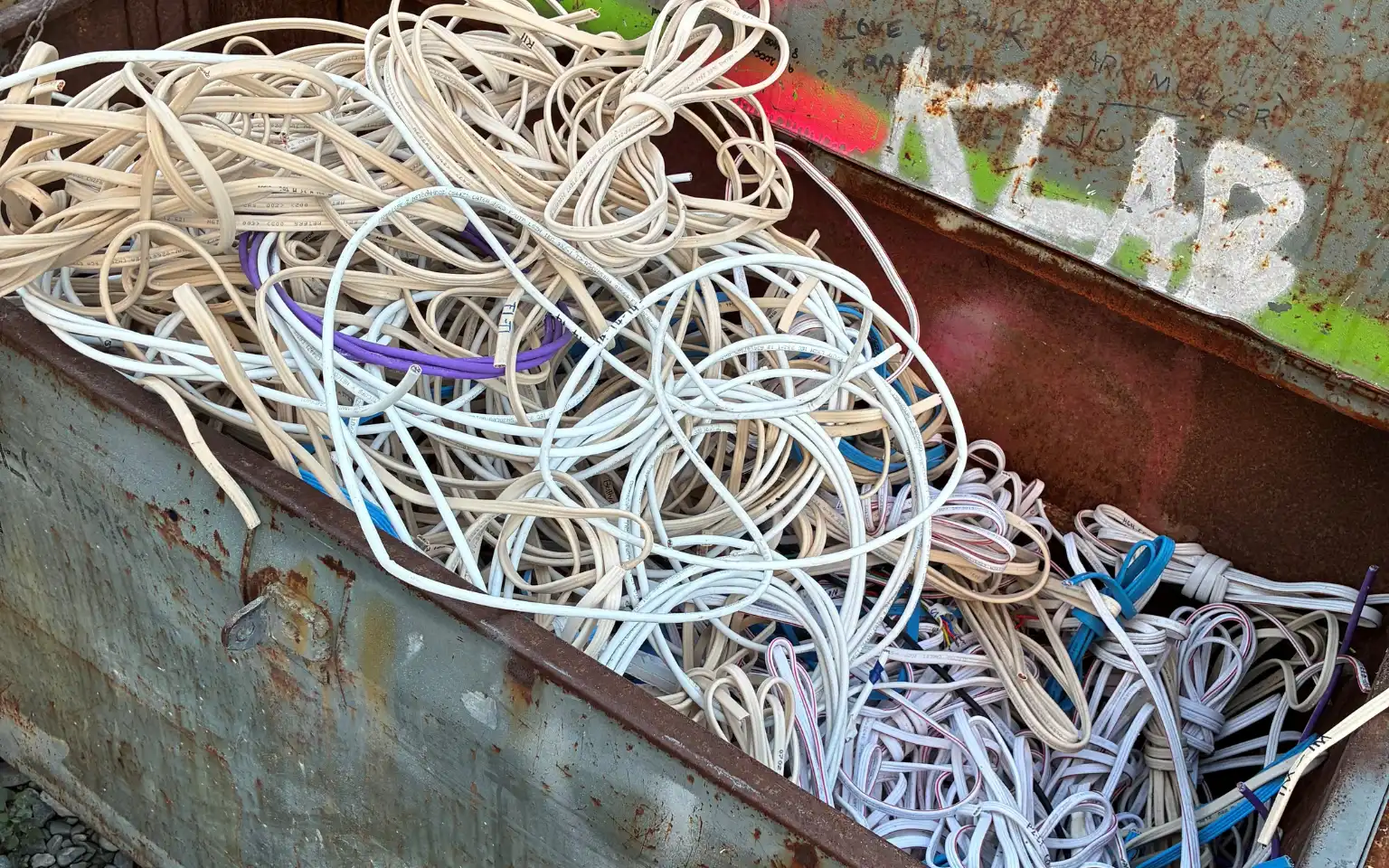
Every construction site generates electrical cable off-cuts. For years, the industry’s answer to cable waste has been simple: collect it, hand it to a recycler, move on. Aotea Electric Canterbury decided that wasn’t good enough.
The Problem Hiding in Plain Sight
Cable off-cuts have always been recycled to some degree – copper is valuable, and recyclers have never had much trouble finding a buyer for it. But look closer at where that recycling actually happens, and a less comfortable picture emerges.
Traditionally, cable waste collected from New Zealand sites is aggregated, bundled, and exported overseas for large-scale processing. Copper is recovered because that’s where the commercial value sits. The plastic insulation surrounding it – PVC, PE, XLPE, PP, PUR/PU – is a different story. In many offshore processing contexts, the cheapest way to get at the copper inside is to simply burn the plastic off, releasing hydrogen chloride, carbon monoxide, and other toxic gases. What isn’t burned often ends up in landfill, where plasticisers, heavy metal stabilisers, flame retardants, and microplastics can leach into the environment.
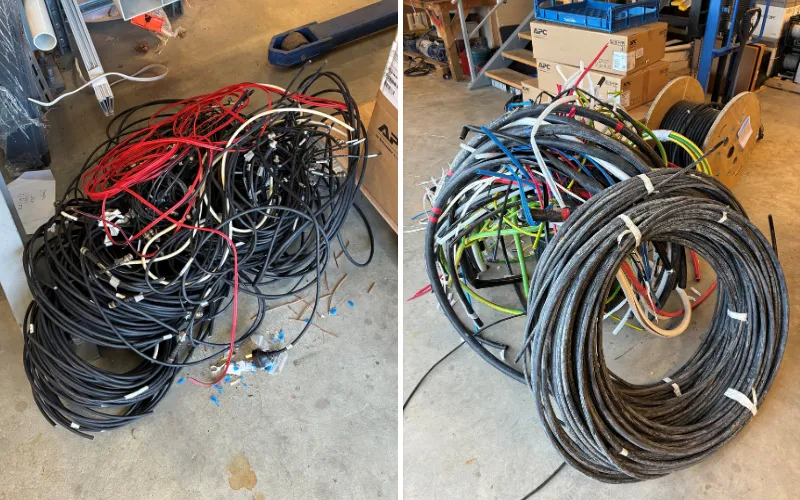
Our own crews were already doing the hard part – diligently collecting cable off-cuts on site rather than letting them go to general waste. But we recognised that diligence was only solving half the problem.
A Different Approach: Recover Both Materials, Keep It Onshore
So we became the inaugural industry partner in establishing the Site Copper Recovery Programme (SCRP) – a New Zealand-based model built around a simple but overlooked idea: cable off-cuts aren’t one waste stream, they’re two distinct recoverable resources, and both deserve responsible handling.
Under SCRP, copper is directed into certified remanufacturing supply chains, while recovered plastics are redirected into New Zealand manufacturing applications, including construction products – turning what used to be an offshore environmental liability into a local circular-economy input.
Crucially, the programme required no change to how our site crews already worked. Electricians keep collecting cable waste exactly as before. SCRP layers structured collection, processing, and certified reporting on top of that existing behaviour, so the environmental gain doesn’t come at the cost of added admin or disruption to project delivery.
Cable Waste Recycling: The Numbers So Far
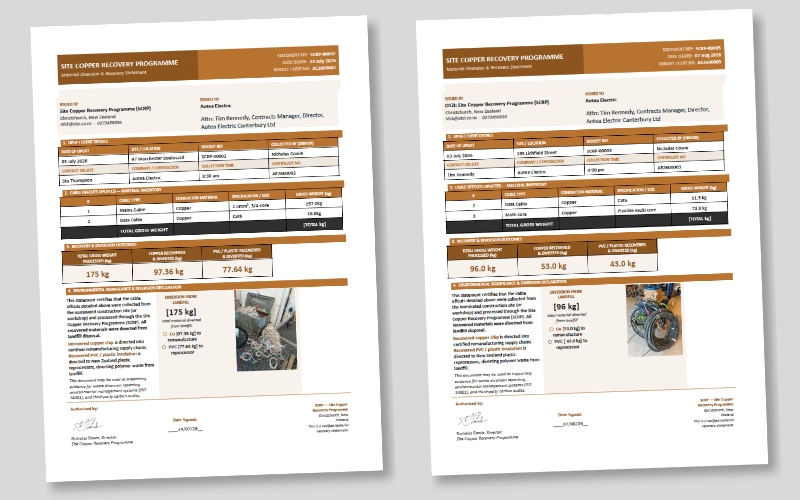
Because every collection is independently weighed and certified, this isn’t a story we’re telling on faith. Since the programme began in 2026, three fully certified cable waste collections have diverted a combined 340.41kg of material from landfill – 185.56kg of copper and 154.85kg of PVC and plastic insulation:
- Collection 1 (19 June 2026, 195 Lichfield St): 69.41kg diverted – 35.2kg copper, 34.21kg PVC/plastic
- Collection 2 (3 July 2026, 97 Worcester Boulevard): 175kg diverted – 97.36kg copper, 77.64kg PVC/plastic
- Collection 3 (3 July 2026, 195 Lichfield St): 96kg diverted – 53kg copper, 43kg PVC/plastic
Every kilogram is backed by a formal Site Diversion Statement – independently signed, certified, and usable as supporting evidence for ISO 14001 environmental management systems, third-party carbon audits, and sustainability reporting. That’s a level of traceability standard cable recycling arrangements simply don’t offer.
Recognition From the Ground Up
This work hasn’t gone unnoticed. Head contractor Dominion Constructors formally recognised our team’s contribution to their Green Star environmental performance targets – a Focused Recognition award citing our contribution to their “Protect & Respect” key performance indicator, for creating a more sustainable environment that supports the physical, social, cultural, and economic wellbeing of our communities.
We’ve also made sure this isn’t a quiet, background initiative. Nicholas Cowie of SCRP presented to our entire staff at an all-staff meeting, so that everyone in the business – not just the crews directly collecting off-cuts – understands what we’re doing and why. The programme has also been presented at both management and board level, because sustainability commitments should be backed by the whole organisation, not run in isolation by one team.
Where This Goes Next
SCRP has only just begun scaling across our project pipeline, but the framework is already in place to capture and certify every kilogram diverted, site by site, as volumes grow. As more collections are completed, we’ll keep building a clearer picture of just how much material and how much harm can be avoided simply by asking a better question about where cable waste really goes.
We didn’t wait to be asked to do this. Sustainability reporting is only going to become a bigger part of how we work with clients, and we’d rather be ahead of that than catching up to it.
Aotea Electric Canterbury – proud to lead where the industry hasn’t yet.