

History of Lyttelton Dry Dock
On 3 January 1883, the Lyttelton Graving Dock (also known as a dry dock) was opened with great ceremony. Designed by harbour board engineer C. Napier Bell, Lyttelton’s graving dock was built of masonry and concrete. The decorated Hurunui – ‘the very perfection of neatness and order’ – sailed in on opening day, breaking a blue ribbon. Thirty speeches followed.
Now the Lyttelton Dry Dock is a registered historic place, and up to the earthquakes of 2010, 2011, and 2012, the graving dock was still in use for ships needing repairs.
Dry Dock Modernisation
In recent months the Lyttelton Port Company has been working on the long-awaited upgrade of the Dry Dock. We were delighted to be involved in this project, working with Connetics and LPC, as the Dry Dock has undergone a huge electrical and lighting upgrade.
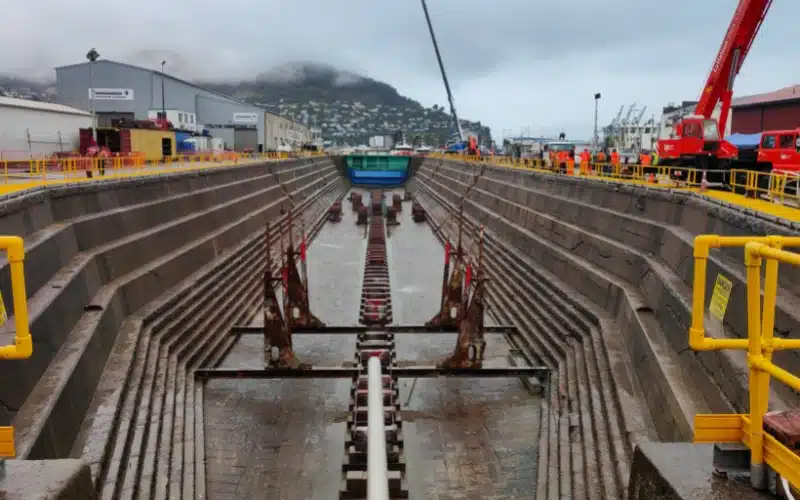
Lyttelton Dry Dock during the modernisation and electrical upgrades
A ribbon was cut on 31 August 2022 to mark the recent upgrade projects. The new amenity block and electrical upgrades will future-proof the dry dock, make it safer and more sustainable.
The blessing was attended by contractors and staff involved in the build, along with LPC’s Waiata Group who closed the blessing with Whakataka Te Hau.
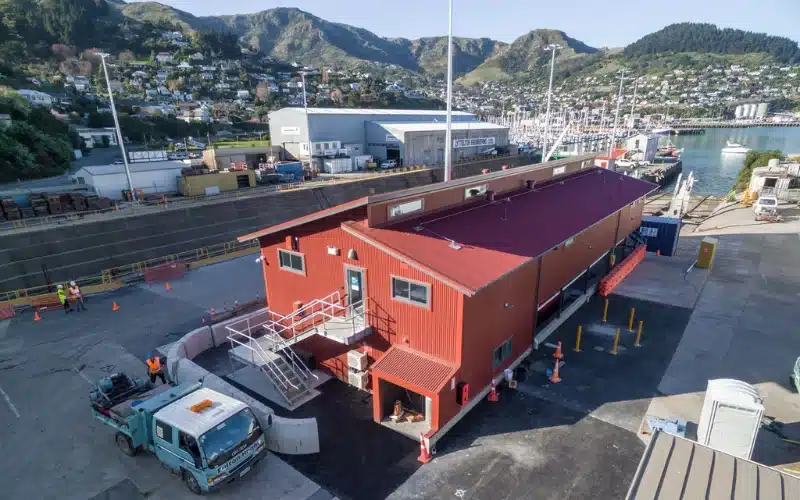
The new Lyttelton Dry Dock building with crew facilities
The electrical upgrades
The Dry Dock at Lyttelton Port was constructed in 1882 and is a Category 1 heritage listed structure. The Dry Dock electrical upgrade project was part of a wider series of upgrade projects at this facility. The project was undertaken to improve the reliability and capacity of shore power electrical supplies to docked vessels and to also improve the quality of lighting around the dock perimeter.
The majority of the works were to be completed within a planned one-month closure of the dock, and there was considerable pressure to ensure that the works did not extend the closure period – vitally important when there is often a three year wait list for vessels to enter Dry Dock.
The new lights at the Dry Dock are LEDs, which are more sustainable than the previous halogen ones, as well as being directional. This means they will have little impact on the surrounding community.
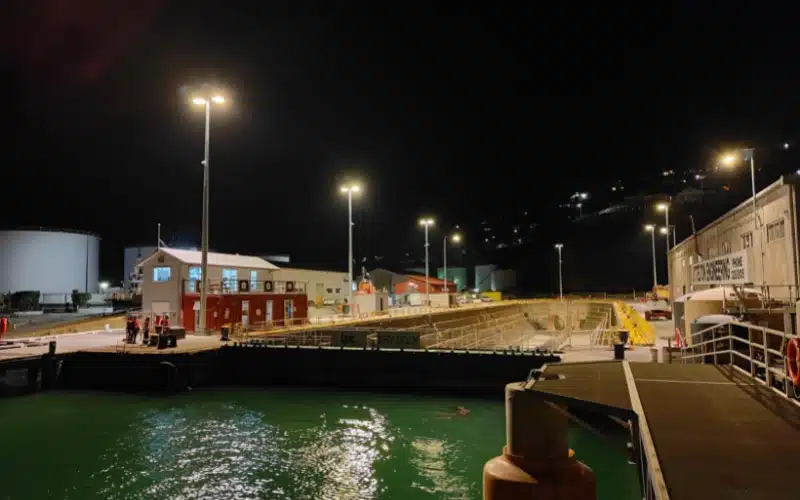
Upgraded floodlights at Lyttelton DryDock
The electrical upgrade was much needed, as when the dry dock opened, it was run on steam. While it has since been converted to electricity, it lacked safe and sufficient modern systems.


Upgraded electrics at LPC Dry Dock
“Aotea Electric Canterbury were a key contractor in the delivery of this historic upgrade. They contributed to the Early Contractor Involvement phase, influencing final design and construction sequencing. They were particularly influential in defining the early works sequence which involved decommissioning of one of two shore power substations while the dock was operational.
During the closure period, Aotea were responsible for installing the low voltage network and switchboards into the two upgraded substations. They faced considerable challenges as trenching, pull pits and buildings were also constructed during the closure period. This methodology substantially impacted the periods of time available for Aotea to complete their scope of work, which became increasingly compressed, in order to meet the critical reopening date.
“Aotea were consistently professional in their approach and worked safely and collaboratively with the multiple contractors and dock users on site. Testament to their commitment and exceptional efforts, the project was completed ahead of schedule, in spite of the considerable challenges.” Hannah Fyffe, Project Manager LPC

Pull pit electrical and ducting

Working on electrical cabling and ducting

While these are all major improvements on a heritage site, there is still work to do. Built in the 1880’s, the dry dock is our oldest piece of infrastructure, and we are proud to be part of the team modernising this historic asset.
Lyttelton Dry Dock specifications
- Floor length: 137.15 metres
- Floor width: 14 metres
- Top length: 146.75 metres
- Entrance width: 18.80 metres
- Maximum draft: 6.1 metres (subject to vessel type)
Typical work carried out in the Dry Dock
- hull, deck, or engine repairs
- structural, plating, and tank repairs
- tail shaft and propeller survey and repairs
- preparation and painting
- echo sounder installations
- any other underwater repair or modification
Upgraded floodlights coming online at Lyttelton Dry Dock